If you were born in October, you know your birthstone is opal. You've probably seen pictures of those fiery, rainbow-like flashes. But let's be honest, most articles stop at calling it "magical" and move on. What does that even mean? Is it just a pretty rock, or is there something more to the October birthstone opal meaning that makes it worth your attention—and maybe your jewelry box?
I've been working with gems for over a decade, and opals are the divas of the mineral world. Stunning, yes, but misunderstood. People either adore them or are scared of them because of weird myths. The real story of opal's meaning is a mix of ancient lore, geological wonder, and some very practical advice that most jewelers gloss over. We're going past the basic symbolism. We'll dig into what that symbolism meant to people centuries ago, why opal behaves the way it does (it's not magic, it's science), and most importantly, how to live with one if you own it. Because an opal isn't like a diamond you can forget about. It needs a relationship.
What's Inside This Guide?
The History and Symbolism Behind Opal's Meaning
Forget the bad luck myth for a second. That's a relatively modern, and largely literary, invention. For most of human history, opal was the ultimate good luck charm. The ancient Romans called it "cupid paederos," or "child as beautiful as love." They saw it as a symbol of hope and purity. Arabic cultures believed opals fell from the heavens in flashes of lightning. That's a far cry from being unlucky, right?
The October birthstone opal meaning is deeply tied to its appearance. That shifting, internal fire led many to believe it contained the powers of all gemstones. The Roman scholar Pliny the Elder famously wrote that opal had "the fire of the carbuncle (garnet), the brilliant purple of the amethyst, and the sea-green of the emerald, all shining together in an incredible mixture." It was the ultimate all-in-one gem.
In the Middle Ages, blond women wore opals to protect their hair color. It was believed to have the power of invisibility, making it a favorite for thieves and spies (a fun, if dubious, bit of trivia). The real shift in perception came in the 19th century with Sir Walter Scott's novel Anne of Geierstein, where an opal-bearing heroine meets a tragic end. Fashion is fickle, and the superstition stuck in some circles, despite having no basis in centuries of prior belief.
My take: The "bad luck" tag is the worst thing that ever happened to opal's marketing. It's pure fiction. If you love an opal, wear it with confidence. Its historical meaning is overwhelmingly positive—associated with hope, creativity, and amplified emotions. It's a stone for artists, dreamers, and anyone who embraces change, much like its own shifting colors.
The Science of Play-of-Color: Why Opals Shine
Okay, so what's actually going on inside an opal? This is where the "magic" becomes understandable, and honestly, more impressive. Opal isn't a crystalline mineral like a diamond or sapphire. It's a hydrated form of silica, kind of like a hardened gel. Its structure is what makes it special.
Precious opal (the kind with the play-of-color) contains a vast, orderly arrangement of tiny silica spheres, all stacked together. Light waves enter this structure, bend, and break apart—a process called diffraction. The size and arrangement of these spheres determine which colors you see. Larger spheres give reds and oranges, smaller ones give blues and greens. This is the play-of-color. Common opal ("potch") has a chaotic structure, so the light just scatters, giving a milky or waxy color without the rainbow fire.
This structure also explains opal's main vulnerability: water. Opals can contain between 3% and 21% water, trapped in that microscopic structure. This is crucial for understanding how to care for it.
Not All Opals Are the Same: A Quick Guide to Types
When you hear "opal," you might picture a white stone with rainbow flashes. That's just one kind. Where an opal forms changes everything about its look and value.
| Type | What It Is | Key Characteristic |
|---|---|---|
| White or Light Opal | The classic. Forms in lighter host rock. | White, cream, or light gray body color with play-of-color. Most common type from Australia. |
| Black Opal | The most valuable. Forms in dark host rock (like ironstone). | Dark body color (dark gray to jet black) that makes the play-of-color pop dramatically. Primarily from Lightning Ridge, Australia. |
| Boulder Opal | Opal formed in thin veins within ironstone boulders. | The opal is often left attached to the dark host rock, creating natural, organic-looking pieces. From Queensland, Australia. |
| Crystal Opal | Any opal with a transparent to semi-transparent body. | The play-of-color seems to glow from within because you can see through the stone. Can be on light or dark backgrounds. |
| Fire Opal | A term often misused. True fire opal is from Mexico. | Valued for its warm body color (yellow, orange, to red). It may or may not have play-of-color. The orange body color is its main feature. |
| Ethiopian Opal | A newer, major source of opal, often hydrophane. | Can be stunningly bright and often has a honey-like or translucent body. It absorbs water, which changes its appearance temporarily—a critical care note. |
I once had a client bring in a stunning Ethiopian opal ring that had gone almost completely clear and lost its fire after she wore it in the shower for a week. She thought it was ruined. After a slow, careful drying process away from heat, it returned to its original glory. That's the kind of practical knowledge that gets missed.
How to Buy an Opal: What to Look For (Beyond the Price Tag)
So you're thinking of getting an opal. Great. Don't just look at the price and the sparkle. You need a checklist. The value is judged on three main factors, often called the "Three Cs" for opal: Color, Pattern, and Clarity (body tone). Cut is important too, but it's more about showcasing the first three.
1. Color (Play-of-Color): This is about the spectral colors you see. Red is the rarest and most valuable, followed by orange, green, blue, and violet. A stone that shows a full spectrum is more valuable than one showing only blue-green. Also, look for the brightness and intensity. Is the color vivid or dull?
2. Pattern: How is the color distributed? Some patterns are more sought-after. Here's a quick rundown from a collector's perspective:
- Harlequin or Mosaic: Large, angular blocks of color. This is the holy grail, extremely rare and valuable.
- Ribbon or Banded: Parallel streaks of color. Very desirable.
- Straw or Chinese Writing: Fine, random lines that look like writing.
- Pinfire or Confetti: Small, pinpoint flashes of color. Common and lovely, often more affordable.
3. Clarity & Body Tone: This refers to the background the color plays against. For non-crystal opals, you want a clean stone without visible sand or potch inclusions that block the color. Body tone ranges from N1 (black) to N9 (white). Darker body tones (N1 to N4) generally make the color contrast stronger, hence the premium on black opal.
A common mistake? Buying an opal set in a poorly designed ring for daily wear. Opals are soft (5.5-6.5 on the Mohs scale). A high, exposed setting is an invitation for a chip. Look for a bezel or a semi-bezel setting that protects the girdle (the edge) of the stone.
Caring for Your Opal: The Rules Everyone Gets Wrong
This is the part most articles breeze through, and it's the most important. Opal care isn't hard, but it's specific. Get it wrong, and you can permanently damage your stone.
The Big Myth: "Opals are fragile and will crack if you look at them wrong." Not exactly. Stable opals from places like Australia are quite resilient if treated right. The main enemy isn't impact first—it's sudden temperature change and dehydration.
Think of a solid opal like a hard sponge. It has water in its structure. Extreme, dry heat (like a car dashboard in summer, a heater vent, or prolonged direct sunlight) can bake that water out, causing crazing—a network of fine cracks. Once it crazes, it's done.
Here’s your action plan:
- Wear it often: The natural oils and moisture from your skin are good for it. It's jewelry that likes to be worn.
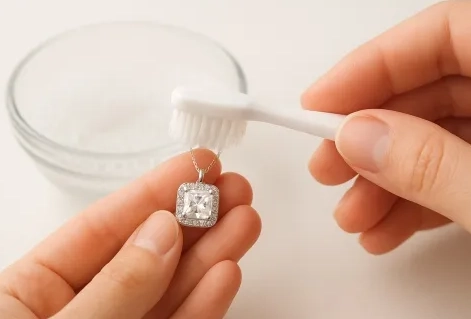
- Clean it gently: Warm, soapy water and a soft cloth are perfect. Never use ultrasonic cleaners, steamers, or harsh chemicals. That's a one-way ticket to a dull or cracked stone.
- Store it right: Not in a safety deposit box long-term (too dry). Keep it in a soft pouch, not rubbing against harder gems. Some people add a damp cotton ball in the baggie for very dry climates, but don't let the stone sit in water.
- Know your opal's origin: This is critical. Ethiopian hydrophane opals act differently. They absorb liquids like water, lotion, or perfume, which can make them temporarily cloudy or even change their color play. They usually dry out and return to normal, but it's a shock to see. Avoid getting them wet during wear.
- Take it off for: Gardening, dishes, gym workouts, swimming (pools and oceans), and applying lotions/perfumes.
The goal isn't to make you paranoid, just informed. With these habits, an opal can last generations. I have a client's Australian white opal ring from the 1920s that's still vibrant because it was cared for properly.
Your Opal Questions, Answered
Is it true opals bring bad luck if they're not your birthstone?
That's a persistent myth with zero historical basis before the 1800s. In virtually all ancient cultures, opal was a talisman of good fortune, hope, and amplification. The bad luck story is traced to a novel and competitive diamond marketers of the era. Wear an opal anytime you're drawn to its beauty. Its energy is about creativity and emotional expression, not misfortune.
My opal in a ring looks cloudy sometimes, especially after cleaning. What's happening?
You likely have an Ethiopian hydrophane opal. These opals absorb water and other liquids. When water soaks in, it fills the microscopic spaces that cause the play-of-color, temporarily making the stone look more transparent or cloudy and dampening the fire. Don't panic. Let it dry naturally at room temperature for a few days, away from direct heat. It should return to its original state. To prevent this, clean it with a dry, soft cloth instead of water.
What's a fair price for a real opal? I see huge ranges online.
Opal pricing is incredibly varied, like art. A small, pretty Australian white opal with blue-green pinfire can be under $100. A fine black opal with a harlequin pattern of red can cost tens of thousands per carat. For a starter piece, expect to pay $200-$500 for a decent quality, smaller white or crystal opal in a silver setting. Always buy from reputable dealers who disclose the opal's type and origin. If a price seems too good to be true for a "black opal," it's probably a treated common opal or a synthetic.
Can opals get wet? I've heard completely opposite advice.
This is the most confusing point. Here's the breakdown: Solid Australian opals are stable with occasional, brief contact with water (like washing hands). Their structure is stable. The risk is them getting knocked against a sink, not the water itself. Ethiopian hydrophane opals should avoid immersion, as they absorb water. Doublet or triplet opals (layered stones) must never get soaked, as water can seep between the layers and cause delamination, ruining the stone. The safe rule for all: take your opal jewelry off before bathing, swimming, or dishwashing.
How can I tell if my opal is real or synthetic?
Synthetic opals (like Gilson opals) are real silica, just made in a lab. They can be beautiful and durable. The giveaway is often an “too perfect” look. Natural opal has randomness—color patches vary in size and shape, and the background may have natural imperfections. Synthetic opals often show a very regular, “snakeskin” or “lizard skin” pattern under 10x magnification, with columns of color that look too orderly. When in doubt, have it checked by a certified gemologist. A reputable seller will always disclose if a stone is lab-created.
The October birthstone opal meaning is a journey from the depths of the earth to the heights of human imagination. It's a gem that demands a bit more knowledge and care than others, but it rewards you with a uniqueness no other stone can match. It's not a static symbol of wealth; it's a dynamic symbol of life's changing colors. Understand its story, respect its nature, and it will be a source of fascination, not anxiety, for a lifetime.
Look at an opal not as a fragile object, but as a captured piece of geological art with a personality. That's the real meaning worth knowing.